How to Pass CELPIP in 2026: The Complete CLB 9–10 Blueprint for Canada PR
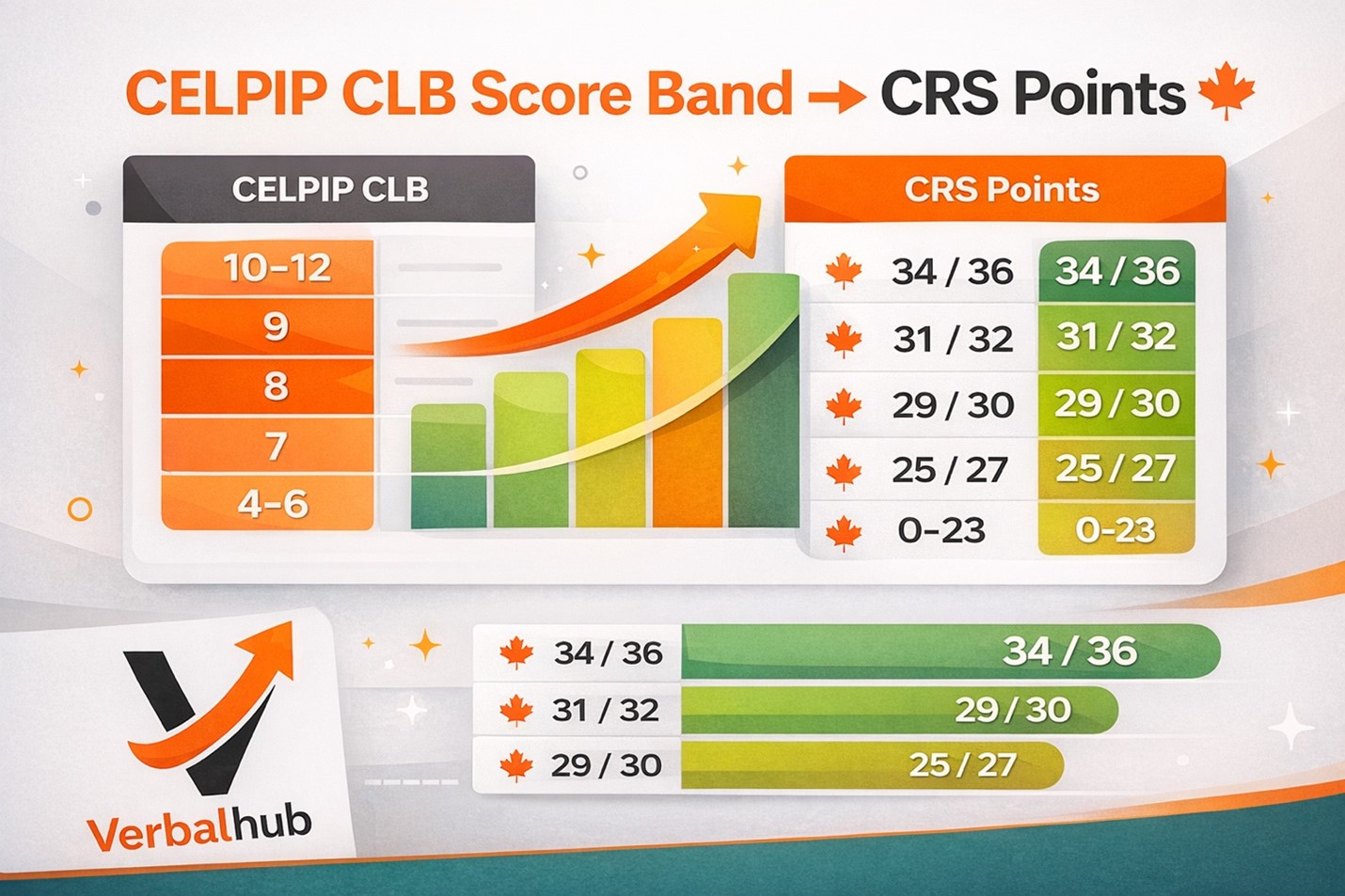
If your goal is Canadian Permanent Residency through Express Entry, your CELPIP score is not just a number — it is a CRS multiplier that can make or break your application. Scoring CLB 9 or CLB 10 in CELPIP in 2026 is one of the most direct ways to gain a competitive edge, and the good news is that most candidates who stay stuck at CLB 7 or CLB 8 are not failing because of weak English. They are failing because of weak strategy. This guide gives you the full picture: what CELPIP rewards, how to prepare section by section, a structured 30-day plan, and the exact mistakes that separate average scores from target scores.
Quick Answer: What Does It Take to Pass CELPIP at CLB 9–10?
To score CLB 9 or CLB 10 in CELPIP in 2026, you need clear and organized communication, not just strong English. CELPIP rewards task relevance, structured responses, natural delivery, and time-aware performance across all four sections: Listening, Reading, Writing, and Speaking. A focused 30-day preparation plan is sufficient for most candidates already at CLB 7–8.
Why CELPIP Matters for Canada PR in 2026
Canada’s Express Entry system evaluates and ranks candidates using the Comprehensive Ranking System (CRS). Language proficiency is one of the highest-scoring factors, and a jump from CLB 8 to CLB 9 can significantly lift your CRS score, sometimes by 30 to 60 points depending on your profile.
CELPIP-General is one of the officially designated English proficiency tests accepted for Canadian immigration. It is designed specifically for practical, everyday Canadian English — making it highly relevant for immigration-focused test-takers. Unlike paper-based alternatives, CELPIP is fully computer-delivered in a single three-hour session, and results are typically available within 2–4 business days.
For Indian professionals and students targeting Canada PR in 2026, CELPIP continues to be a strong strategic choice because of its Canadian context, familiar communication scenarios, and fast result turnaround.
CELPIP Exam Pattern 2026: What You Need to Know
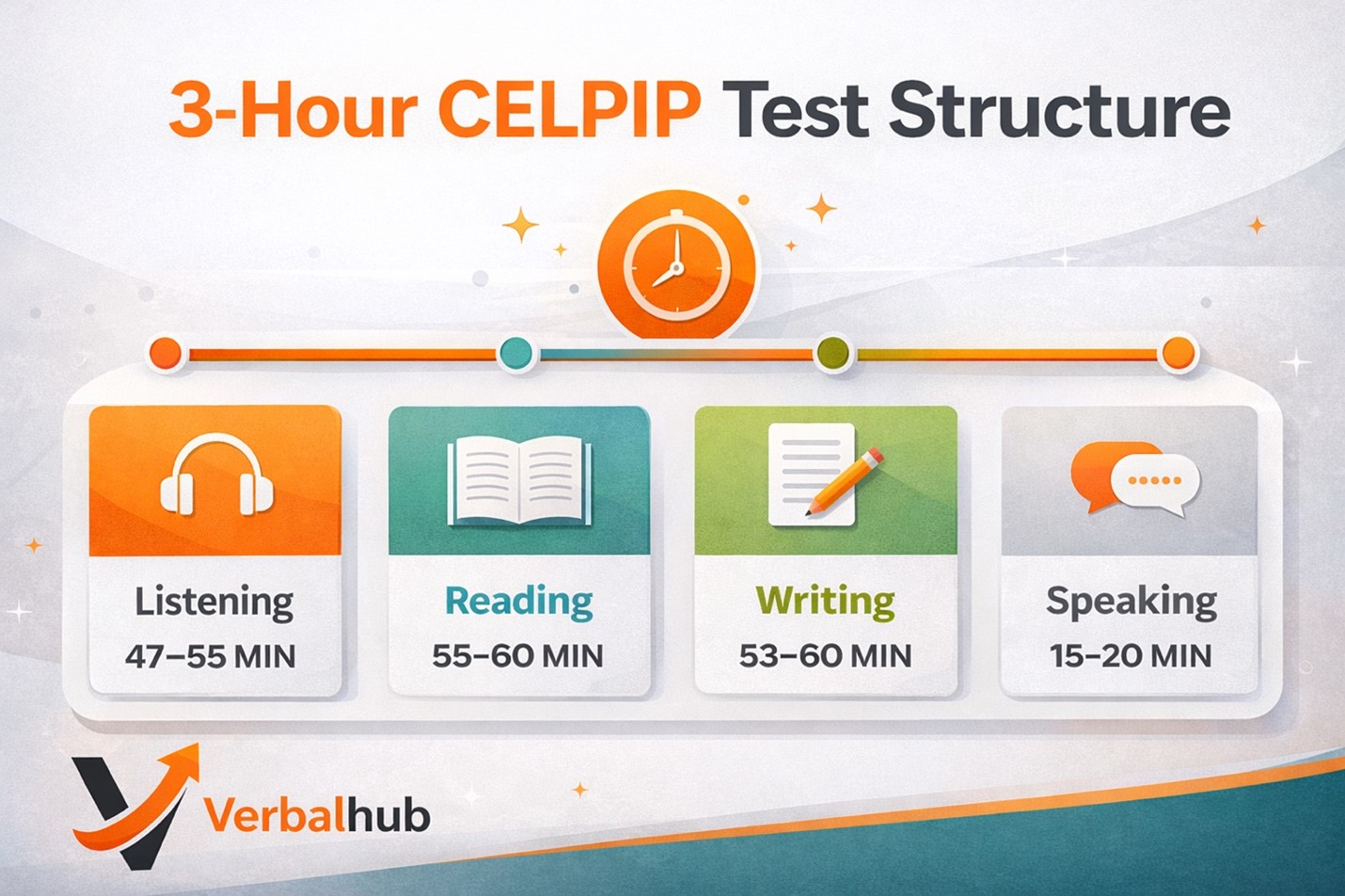
A strong preparation plan begins with a clear understanding of the test structure. Here is how the CELPIP-General exam is structured:
Listening
The Listening section contains eight parts covering a range of everyday Canadian English scenarios — phone messages, news reports, conversations, discussions, and interviews. Audio plays only once, which makes focused attention and note-taking critical.
Reading
The Reading section contains four parts with varied text types, including emails, articles, correspondence, and instructions. Questions test comprehension, inference, vocabulary in context, and ability to identify main ideas.
Writing
Writing contains two tasks. In Task 1, you are required to draft an email in response to a specific scenario. Task 2 involves responding to a survey question by comparing two choices and supporting your preference with clear reasoning.
Speaking
Speaking contains eight tasks covering everyday situations — describing a scene, giving an opinion, making suggestions, dealing with a difficult situation, and more. Responses are recorded and assessed by a minimum of three CELPIP-certified raters. Writing scores are processed through an AI-human hybrid scoring system, with the rating team verifying all scores.
The entire exam is completed in approximately three hours in a single sitting. This makes endurance, screen comfort, and mental focus as important as language skill.
What Do CLB 9 and CLB 10 Actually Mean?
CLB stands for Canadian Language Benchmarks — the national standard for describing English language ability in Canada. CELPIP scores map directly to CLB levels, and those CLB levels feed into your Express Entry CRS score.
CLB 9 is not perfection. It does not require a formal accent, literary vocabulary, or flawless grammar. What it requires is consistent performance across four qualities: clarity, coherence, task relevance, and natural delivery.
At CLB 9–10, examiners in productive skills are looking for responses that are logically organized, sufficiently developed, grammatically controlled, varied in vocabulary, and easy to follow. CELPIP's official scoring criteria for Speaking include Listenability, Vocabulary, Task Fulfillment, and Content/Coherence. For Writing, the criteria are Readability, Vocabulary, Task Fulfillment, and Content/Coherence.
- Grammar weakness is not the primary reason candidates plateau at CLB 7 or 8. It is the failure to shift from casual, everyday communication to structured, score-aware communication.
30-Day CELPIP Study Plan for Working Professionals
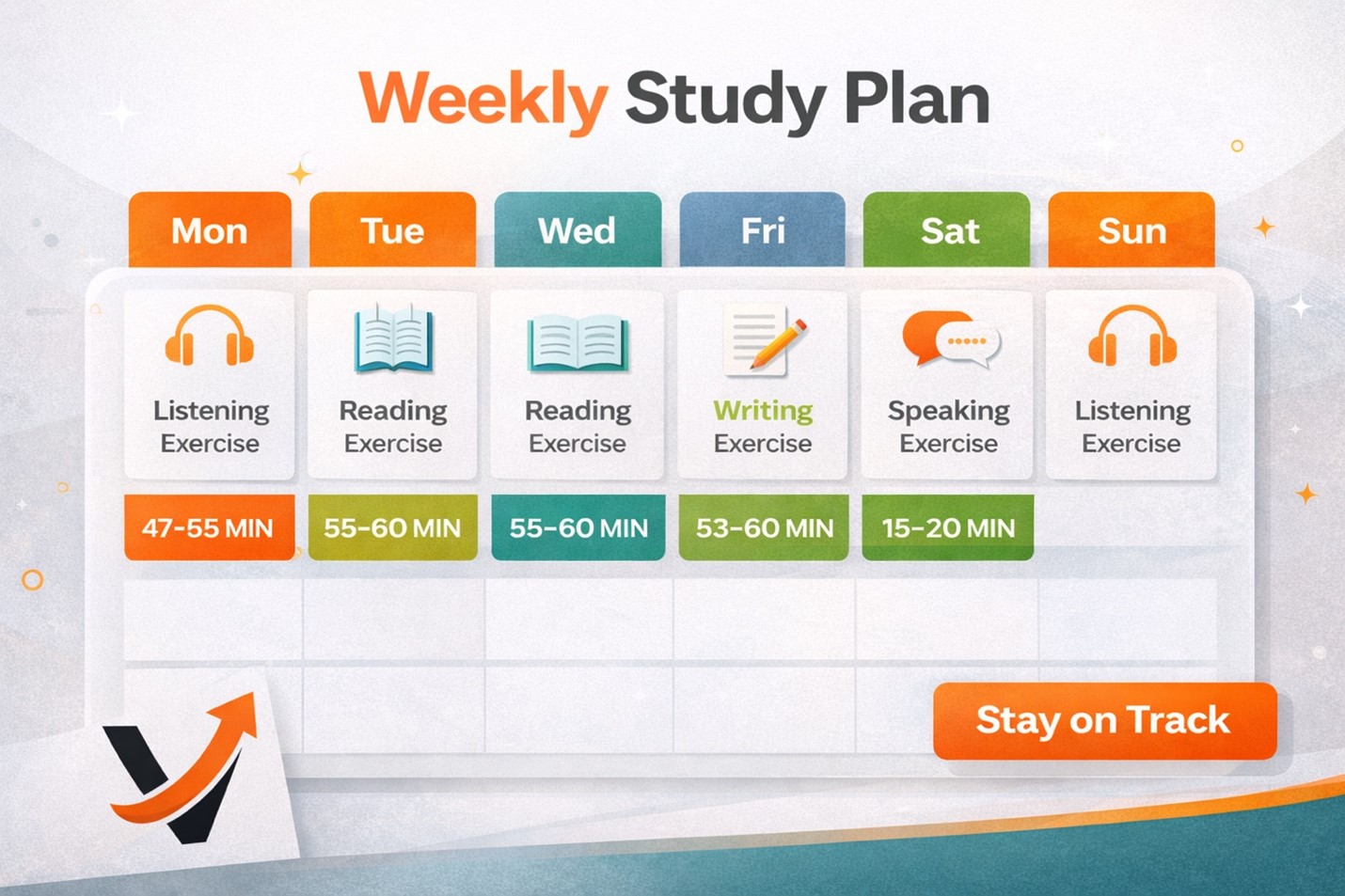
If you are preparing while managing a job or other responsibilities, you do not need ten hours a day. You need a smart daily system. A realistic daily commitment is 2 to 2.5 hours on weekdays, with a slightly longer mock-review session on weekends.
Week 1 — Build Awareness and Baseline
Goal: Understand the test deeply before trying to improve scores.
- Study the CELPIP format, timing, and task types
- Start with a diagnostic test to pinpoint your weakest sections.
- Begin recording your speaking responses daily — non-negotiable
- Check your typing speed; anything below 35 WPM needs attention
- Track errors in Listening and Reading from Day 1
Week 2 — Build Logic and Structure
Goal: Convert raw practice into method.
- Apply the PREP framework to all Speaking tasks (see Speaking section below)
- Practice email writing with a clear opening, organized body, and polite close
- Listen for speaker attitude and intent, not just facts
- Read for conceptual meaning, not just keyword matching
- Identify your five most common grammar errors and target them specifically
Week 3 — Move to CLB 9-Level Complexity
Goal: Add depth, contrast, and nuance to your responses.
- Practice survey responses using the Oppositional Logic structure
- Tackle difficult situation and opinion tasks in Speaking
- Work on denser reading passages with inference questions
- Use transition language: 'However,' 'On the other hand,' 'This suggests that'
- Self-edit your writing for grammar errors and repeated words
Week 4 — Mock, Refine, and Stabilize
Goal: Convert preparation into consistent score performance.
- Complete at least two full-length mock tests
- Review every error with root-cause analysis — not just 'I got it wrong'
- Focus final writing corrections on Task 2 coherence and conclusion
- Do timed speaking practice with 30 seconds of mental planning before you speak
- Prioritize sleep, test-day routine, and mental calm — not new material
CELPIP Listening Strategy: Listen for Intent, Not Just Words
Many candidates approach Listening as a dictation exercise — trying to catch every word. High scorers do the opposite. They listen for meaning, speaker purpose, emotional tone, and implication.
Since audio plays only once in CELPIP, your ability to extract the right information on the first listen is your most important listening skill.
The Two-Column Note Method
During practice, train yourself to track two layers simultaneously:
- Column 1 (What): Facts, names, dates, sequence, actions, key details
- Column 2 (Why): Speaker attitude, complaint, hesitation, recommendation, agreement, frustration
Example: If a landlord says a repair will happen on Tuesday in a polite but vague tone, Column 1 captures 'Tuesday / repair.' Column 2 notes 'polite, not urgent.' That second layer helps with attitude and implication questions that many candidates miss.
Daily Listening Routine (50 minutes)
- 20 minutes: CELPIP-style audio practice
- 10 minutes: Review correct answers — understand why they are correct
- 10 minutes: Analyze incorrect choices — understand why they felt attractive
- 10 minutes: North American English audio exposure for accent and rhythm
CELPIP Reading Strategy: Match Meaning, Not Just Words
A common reason for underperformance in Reading is over-reliance on exact word matching. CELPIP questions are deliberately paraphrased, which means if you search for the same words from the passage, you will frequently be misled.
The stronger approach is conceptual matching: looking for paraphrases, synonyms, cause-effect relationships, author stance, and summary meaning.
If the passage says 'cost-effective,' the correct answer may say 'more economical.' If the passage says 'delayed due to staffing shortages,' the option may say 'postponed because there were not enough employees.' Same meaning. Different words.
How to Train Conceptual Matching
- After each practice question, write the core meaning of the passage sentence in your own words
- Then check which answer option matches that meaning — not the wording
- Identify options that are 'partially true' but miss the specific direction or tone
- Build a vocabulary bank of paraphrase pairs from your practice
CELPIP Speaking Strategy: Structure Beats Fluency
Speaking is the section where otherwise strong candidates lose the most marks. The reason is almost always the same: they start well, drift in the middle, and finish weakly — or they speak fluently but say very little of substance.
Official CELPIP guidance emphasizes giving raters enough content, drawing on personal experience where possible, and using your own words rather than repeating the prompt. This tells you something important: CELPIP Speaking rewards developed, relevant, easy-to-follow answers, not impressive vocabulary lists.
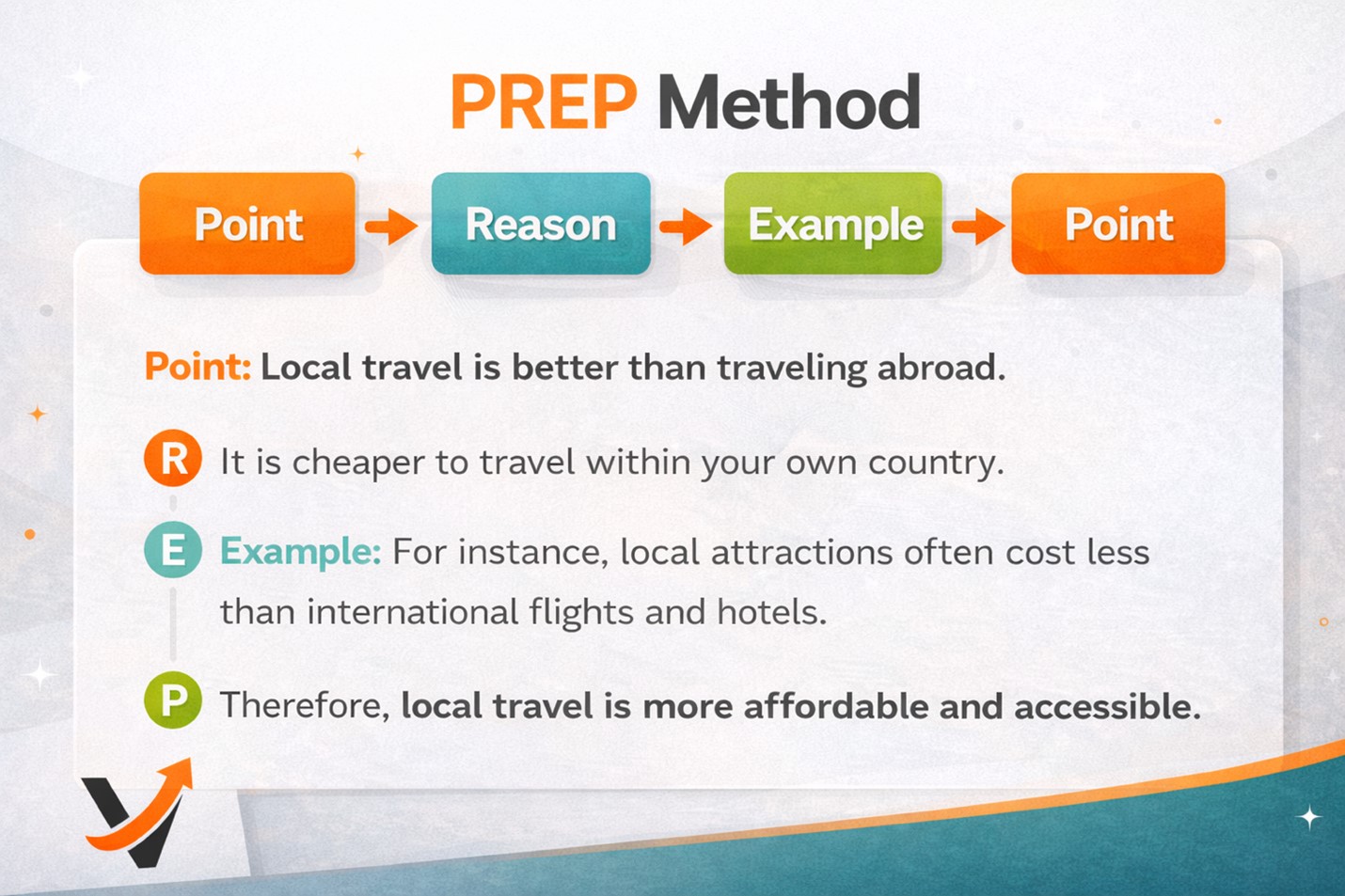
The PREP Framework for CELPIP Speaking
Apply this structure to most tasks:
- P — Point: State your main answer clearly in the first sentence
- R — Reason: Explain the reasoning behind your answer
- E — Example: Give a concrete situation, detail, or scenario
- P — Point Again: Wrap up with a brief, confident closing statement
This framework prevents rambling, ensures you cover all scoring dimensions, and makes your response easy to follow.
Example — Task: Is online learning better than classroom learning?
- Point: I believe online learning is more practical for working adults. Reason: It offers scheduling flexibility and eliminates commute time. Example: Many professionals can attend live classes in the evening from their own homes, without disrupting their workday. Point Again: For anyone balancing work and study, online learning is simply the more efficient path.
Speaking Habits That Lower Your Score
- Overusing fillers: 'actually,' 'basically,' 'you know,' 'like'
- Restarting sentences mid-thought — breaks listener comprehension
- Speaking too fast as a proxy for fluency — raters prefer clarity over speed
- Using memorized template openings that do not fit the specific question
- Repeating the same adjective or phrase across the entire response
- Providing a lot of words without a developed, specific answer
CELPIP Writing Strategy: Control Is More Valuable Than Decoration
Writing is often the section in which candidates overestimate their performance. Writing 250 words does not mean writing well. CELPIP writing is evaluated on grammar control, readable organization, relevant task completion, and vocabulary range.
Because CELPIP uses an AI-human hybrid scoring system for Writing — with the rating team reviewing and verifying all scores — your responses need to satisfy both machine-readable patterns (grammar, structure) and human-evaluated criteria (clarity, task fulfillment).
Writing Task 1: Email — Be Useful, Not Impressive
This task rewards clarity over complexity. A strong email includes:
- A clear, specific purpose in the opening line
- Two to three organized body points that address the scenario
- A polite, professional tone throughout
- A clear action request or closing statement
- Minimal grammar errors and consistent sentence control
Do not overcomplicate this task. The examiner is not looking for literary prose. They are checking whether your email would be useful and clear to a real recipient.
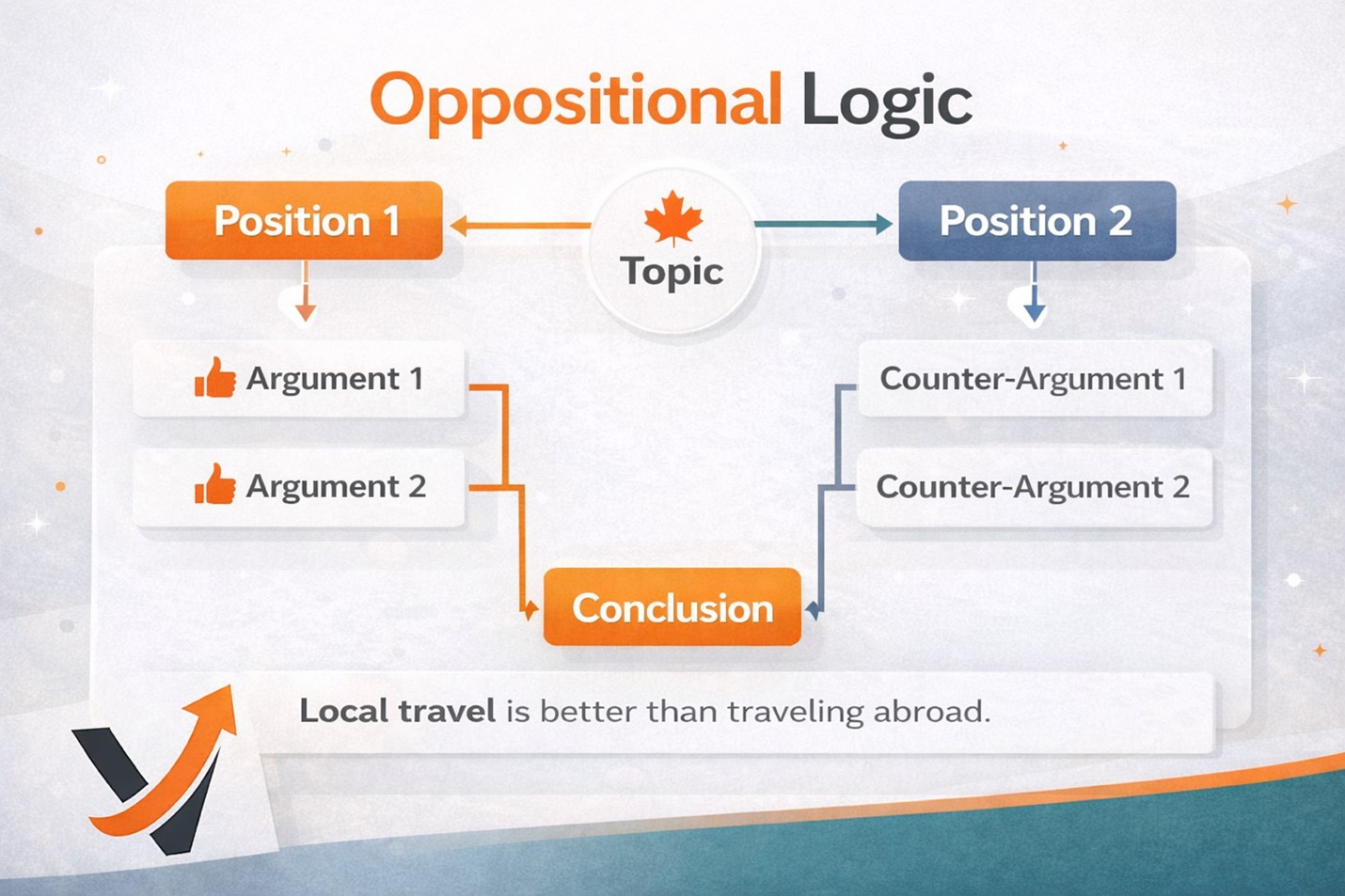
Writing Task 2: Survey Response — The Oppositional Logic Method
Task 2 is where most CLB 9 targets are won or lost. A strong survey response does not just pick a side and explain it. It acknowledges the alternative, contrasts both options intelligently, and concludes with a clear, reasoned preference.
Structure:
- Choose your preferred option and state it clearly
- Acknowledge the alternative option with a respectful concession
- Explain why your choice is stronger in this specific context
- Provide practical reasoning or a relatable example
- Conclude with long-term value or a firm recommendation
Example sentence demonstrating the method:
- "While expanding the library would benefit students who prefer physical study environments, investing in digital infrastructure would serve a broader range of learners — especially working adults and remote users who cannot access campus facilities regularly."
That single sentence shows contrast, judgment, vocabulary range, and task engagement. That is exactly what moves a response from CLB 7 to CLB 9.
Technical Preparation: The Underestimated Edge
CELPIP is not only a language exam — it is a computer-delivered performance exam. Technical habits matter more than most candidates realize.
- Typing speed: Practice until you can type comfortably at 35–40 WPM. Slow typing creates time pressure in Writing that undermines your language quality.
- Microphone discipline: Speak at a natural distance from the microphone. Avoid breathing directly into it. Speak at a steady, moderate pace — not hurried.
- Headset comfort: Use the same type of headset in practice that you will use in the exam centre.
- Screen endurance: Train on a computer screen, not on paper. Reading and listening fatigue on a screen is different, and it matters over a three-hour session.
- One-sitting stamina: Simulate the full test in one session at least twice before your exam date.
Most Common Mistakes That Keep Candidates Stuck at CLB 7–8
These patterns appear consistently across candidates who stagnate below their target score:
- Memorizing full answer scripts — Templates are useful; memorized speeches are detectable and penalized for coherence gaps.
- Practicing without reviewing errors — Mocks without analysis are wasted preparation time. Every wrong answer needs a root cause.
- Using impressive vocabulary unnaturally — CELPIP rewards appropriate vocabulary, not forced complexity.
- Speaking too fast — Speed signals anxiety to raters. Controlled pace signals command.
- Writing without planning — Even 30–45 seconds of structured planning before you write dramatically improves Task 2 coherence.
- Practicing only strong areas — Real improvement comes from confronting and correcting weak sections.
- No error log — If you do not systematically track your recurring mistakes, you will keep making them.
Tips for Working Professionals Preparing for CELPIP 2026
Preparing for CELPIP while managing full-time work is a common challenge for Indian professionals targeting Canada PR. The answer is not to find more hours. It is to use the hours you have more strategically.
- Prioritize your two weakest sections — do not spread effort evenly across all four
- Use commute time for audio listening practice
- Complete one speaking recording every evening — even 5 minutes of structured speaking builds consistency
- Write one email or Task 2 practice response every second day, not every day — quality over volume
- Protect your mock test slots the same way you protect a work meeting — schedule them and do not skip them
- Focus weekends on full mock analysis and error log review
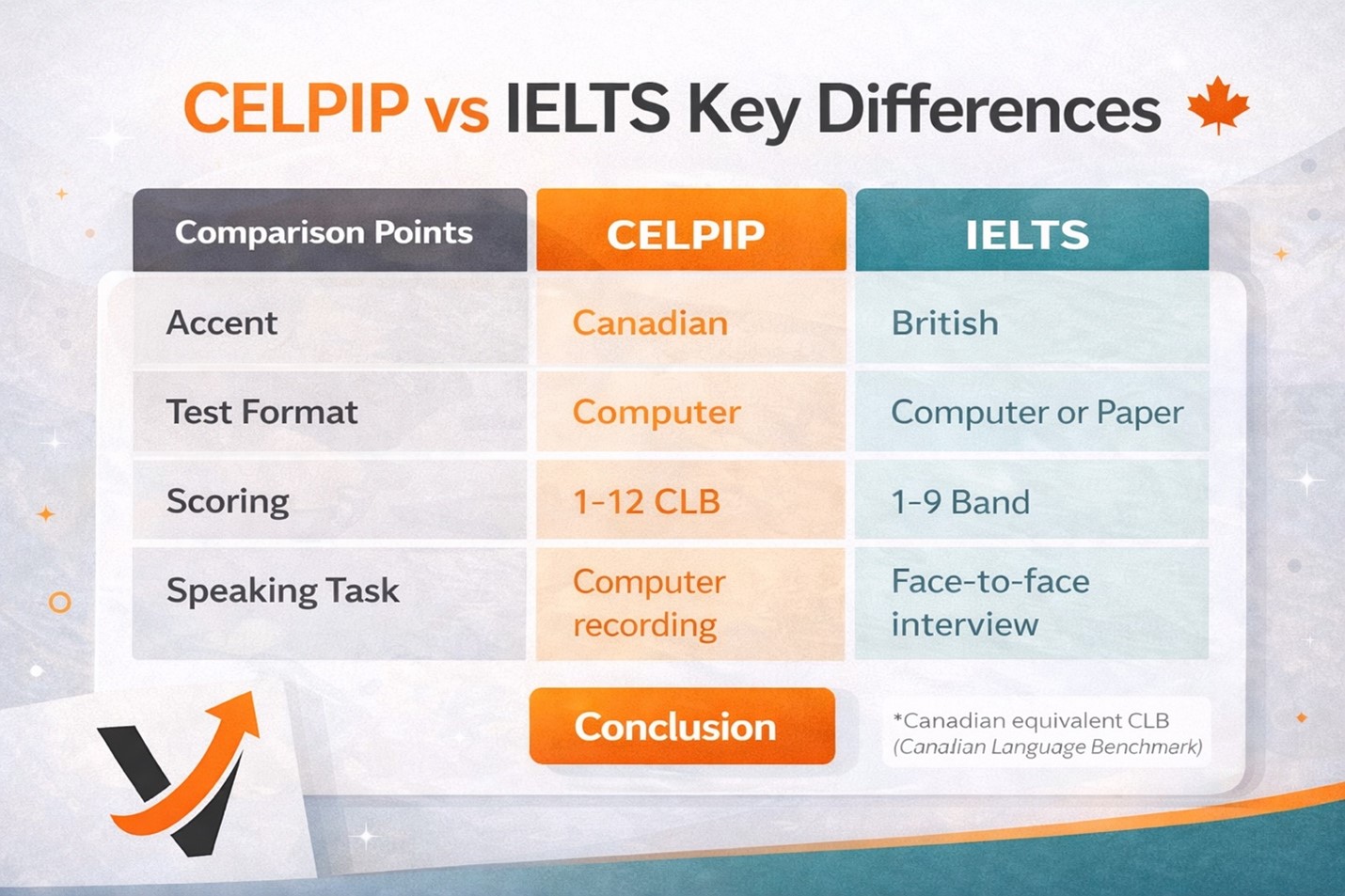
CELPIP vs IELTS for Canada PR in 2026: Which Should You Choose?
The reality is that neither test is inherently easier across the board. The better question is: which test suits your strengths?
CELPIP may be the stronger choice if you are comfortable typing, prefer a computer-delivered format, want Canadian-context communication scenarios, prefer recorded speaking over a live face-to-face interview, and want fast results (2–4 business days).
IELTS may feel more comfortable if you strongly prefer handwriting, feel more confident in a live speaking interview, or have more exposure to international varieties of English.
For most Indian professionals applying through Express Entry, CELPIP's Canadian context and computer format tend to align well with their test-taking strengths. The key is to take a diagnostic test in both formats early and let your own performance data guide the decision.
Frequently Asked Questions: CELPIP 2026
CELPIP Writing is scored through an AI-human hybrid system, with the rating team reviewing and verifying all scores. Speaking performances are assessed by a minimum of three certified CELPIP raters. Scores are reported on a scale of 1 to 12, mapping directly to CLB levels for Canadian immigration purposes.
Yes, 30 days is sufficient for most candidates who are already at a functional English level — typically CLB 7 or above. The key is not practice volume; it is structured, corrected, daily repetition. A candidate who practices 2 hours a day with systematic error tracking will outperform someone who practices 5 hours without review.
CLB 9 represents advanced communicative ability in Canadian English. In Express Entry, reaching CLB 9 across all four skills in the first official language earns significantly more CRS points than CLB 8, and the difference can change your invitation eligibility window substantially.
Yes. CELPIP-General is one of the designated English proficiency tests accepted for Canadian immigration, including Express Entry, Provincial Nominee Programs, and other permanent residence pathways.
This depends on the individual. CELPIP uses a fully computer-delivered format, North American English contexts, and recorded speaking — which many candidates find more comfortable than IELTS's handwritten essays and live speaking interview. However, 'easier' is always relative to the test-taker's strengths. Take a diagnostic mock in both formats to decide.
Focus on two things: Task 2 structure and grammar control. For Task 2, practice the Oppositional Logic method — acknowledge both sides, choose a position, and argue it with specific reasoning. For grammar, track your five most common error types and eliminate them systematically before your exam.
Follow the PREP structure—Point, Reason, Example, then reinforce the Point. Record every speaking practice and listen back critically. Reduce filler words, improve sentence completion rate, and develop every answer with at least one specific example or detail.
A 30-day structured plan works well for most Indian test-takers. Week 1: baseline diagnostics and format familiarity. Week 2: section-specific strategy and daily recording. Week 3: CLB 9-level complexity, contrast language, and coherence building. Week 4: full mocks, error analysis, and stabilization. Two hours of daily focused preparation outperforms five hours of unfocused practice.
Ready to Target CLB 9–10 in CELPIP 2026?
If you have been preparing on your own and still feel uncertain about your score, the missing piece is usually not more practice — it is better-directed practice with structured feedback.
At VerbalHub, the CELPIP program is built around one goal: score-aware preparation that mirrors how CELPIP is actually evaluated. That means structured speaking feedback, Writing task correction, Listening strategy sessions, and full mock test analysis — not generic coaching.
- Most candidates who reach CLB 9 in 30 days do not have better English than those who are stuck at CLB 7. They have a smarter system. VerbalHub is that system.
Book your free demo class and speak directly with a CELPIP specialist.
WhatsApp: +91 8287025756
Prepare with structure. Improve with evidence. Move closer to Canada with confidence.



Our Teachers

Dr. G Ravindra Babu
Quant Faculty
Ph. D in Mathematics Asian International University|| Mathematics Professor at Gitam University || Ex-Mathematics Professor SRM University Amaravathi || MBA in finance Acharya Bangalore B School || GMAT Quant 51, CAT Quant 99.58 %tile, GRE Quant 170 || 21 Different Teaching Certification || Believe in “Education is the mother of leadership”
view details

Dr. Rengarajan Parthasarathy
CAT Faculty
Ph. D in Mathematics from YCM University|| Mathematics Professor at Symbiosis International|| Author of Business Ethics || Ex-CAT Exam Syllabus Advisor in IIM || MBA & MPM from Symbiosis International (Deemed University) || College Topper in Mathematics in Ferguson College || Six Scholarships in Mathematics || 15 Years CAT Coaching, GMAT Coaching and GRE Coaching Experience|| UGC NET Qualified || GMAT Q51, V38 & CAT Q 99.31 & DILR 99.38 %tile, GRE Quant 170 || Believe in “Higher Education Shapes The World.”
view details

Dr. Nisha Tejpal
Verbal & AWA Faculty
Ph. D in English || Published a paper in English in ‘Research Journal of Philosophy and Social Sciences’ || MCA and B.Ed CCS University || A subject expert in Verbal Teaching || 10,000 Plus Essays Analysis || CTET and NET Qualified || More than 15 years of Experience || A writer, Author and Poet || Believe in “Think Beyond the Universe”
view details

Dhrithi Khattar
Verbal Faculty
A subject expert in Verbal Aptitude || More than 15 years of Experience || MBA in HR& Marketing & MA in Economics || Active Member of Hindu Alumni Association || Functional Member of Delhi ||Management Association (DMA) || Operational Member of All India Management Association (AIMA) ||The President of Key Club ||An active member of the French Club ||Gold Seal from California Scholarship Federation.
view details
M. U. Mir
DILR & Quant Faculty
A subject expert in Quantitative Aptitude Training || GMAT Q 51 & CAT DILR 99.75 %tile || GATE 2020 Qualified || M. Tech & B. Tech University Toper (1st Rank) || Awarded by Gov of Odisha, Bihar and J& K for the project Magnetic Floating Model || Ex-Quant Subject Expert in Arihant Publication || An Educationist and Social Worker || Believe in “Education is power”
view details

C. S. Rajawat
CAT Faculty
M. A in Mathematics CCS University|| M. Tech from SRM University || Visiting Mathematics Faculty CCS University ||Experience of 11 Years of CAT Coaching || District Topper in 10th & 12th || Best Teacher Awardee in 2021 & 2022 || CAT Quant 99.43 %tile || Discovered a new Theorem based on HCF in Math || Founder of C. S. Classes ||Believe in “Teaching and Training is an Art.”
view details

Dr. S.K. Singh
PTE/IELTS/CELPIP Expert
Ph. D. English Dr. B. R. Ambedkar University || Delhi & Center Government School Mentor || Founder of Entrepreneur & Learning Startup || IELTS & CELTA Certified from British Council || PTE Certified from Pearson...
view detailsRishabh Arora
PTE/IELTS/CELPIP Expert
MBA in HR International Institute of Management Sciences || PTE Certified from Pearson Test of English|| IELTS & CELTA Certified from British Council || BCA from Integral University || PTE 87 in 2017, IELTS 8.5 in 2018
view details
Jyoti Joshi
IELTS Trainer
Master in English (MA) and Bachelor in Education (B.Ed) || Certified Trainer || IELTS Speaking 9.0 Band holder || Believe in “Great teacher can inspire hope, ignite the imagination, and instill a love of learning”
view details
Surbhi Arora
IELTS / PTE Expert
English Language Expert || More than 3 years of Experience || M.A plus B. Ed Delhi University ||Author, Writer & Classical Singer|| Believe in “Language Language Learning & Teaching is Fun”
view details

Dilip Kumar Rathore
Quant Trainer
A business developer and genius in mathematics || Highly experienced || Master in Maths || well-verse in IT || Believe in “The art of teaching is the art of assisting discover”
view details

Imaam Hasan
Communication Expert
Master in English || Journalist and writer || Certified IELTS & PTE Trainer || A social educater and influencer || Believe in “Education is the movement from darkness to light”
view details